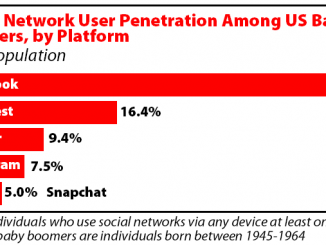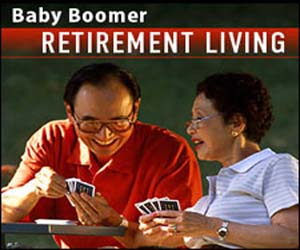






With the over 50 year old market growing at a rate of approximately 8000 per day, clearly, the
Baby Boomer customer is today's target population and tomorrow's.
The whole business of marketing, sales and public relations is about getting information into people's brains and persuading their minds to buy or do something. Marketing and sales professionals often pay little attention to how the consumer thinks and processes information.
Generally, companies think that good service is getting the customer through the sales and service process without a complaint. This does not address the need of strategically designing a product or service for ease of access or use by that segment of the market that is subject to the physical, psychological and emotional changes brought about by the aging process.
The older
Baby Boomers become, the more emotional reactions determine what actually gets our attention. Emotional triggers in the brain activate memories and the stronger the memory - the stronger the emotional response. As we age we begin to rely less on left-brain sequential reasoning and more on emotions – aka “gut feelings” or intuition. Research has shown that the right hemisphere of the brain processes emotional and sensory image information while the left-brain processes logical information through words and numbers.
Those in the
Baby Boomer Generation tend to have greater appreciation for the finer definition that nuance and subtlety give a matter. This bias results from a combination of experience and age-related changes in how the brain processes information. The predisposition of boomers and older consumers to reject absolutism means that marketing communications intended for them should generally reflect a conditional tone. Strongly worded and delivered claims about a product’s features and benefits usually work better with younger, more literal-minded adults. A softer, more deferential, conditional approach is better suited to the Baby Boomer mind that sees reality in shades of gray.
Satisfaction can be defined as the difference between how customers expect to be treated and how they perceive they are treated. Companies that value good service have to help the Baby Boomer customer receive value and a positive experience from the contact that is beyond the intrinsic nature or value of the product or service.
Effective operating manuals, training, user-friendly facilities, inoffensive and sensitive communications, and molding the behavior of every employee that encounters the customer is essential. To respond to the service crises, companies need to develop a mind-set and focus that reflects the belief that whatever enhances Baby Boomer customer services, also enhances customer satisfaction for younger customers - however, the reverse is not true.
Therefore, any business that wants to win the Baby Boomers business has to constantly create new and different ways to enable us to realize value.
JUST FOR BABY BOOMERS: Share your experiences, remembrances and opinions about "Baby Boomers want Good Service" with other Baby Boomers on our "Baby Boomer Forum"